If you came looking for z-image, this review offers a concrete image-generation comparison: Higgsfield Free and AI Video Pro were tested with the same prompt. It shows what the downloaded images and credit charges can—and cannot—establish.
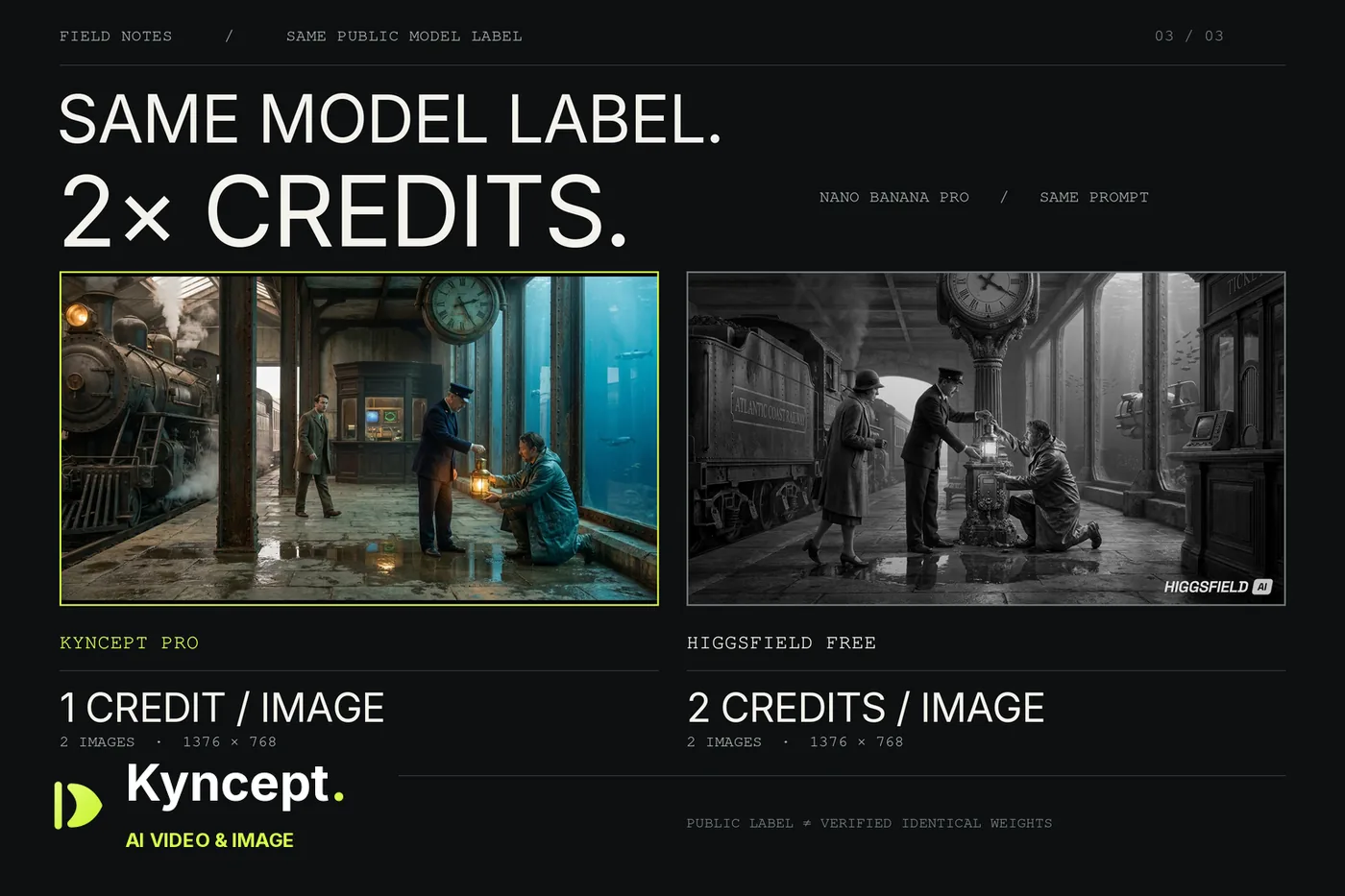
I gave Higgsfield Free and AI Video Pro the same 1123-character still-image prompt, selected the publicly labeled Nano Banana Pro option and 16:9 framing in both editors, then downloaded two originals from each. All four files measured 1376 × 768 pixels. Higgsfield charged two credits per image against AI Video Pro's one; the pictures themselves do not justify declaring an overall quality winner.
My verdict in 60 seconds
I asked for a locomotive, a blue-water seawall, a lantern handoff and a commuter stepping back. Higgsfield and AI Video Pro both captured the setting; neither clearly staged that reaction. Higgsfield Free used twice the credits per still and marked its original PNGs, while the AI Video Pro JPEGs had no visible mark. Different tiers make this an observed trade-off, not a matched-plan price comparison. The product homepages are https://tr.ee/VLR5k6 and https://higgsfield.ai.
- Submissions — two Higgsfield, two AI Video Pro; all four originals measured 1376 × 768 pixels.
- Credits — Higgsfield Free: 10 → 8 → 6; AI Video Pro: 232 → 231 → 230.
- My preference — AI Video Pro for an unmarked original at one measured credit; Higgsfield's two completed Free renders still count. The contact sheet is a composite, not a fifth generation.
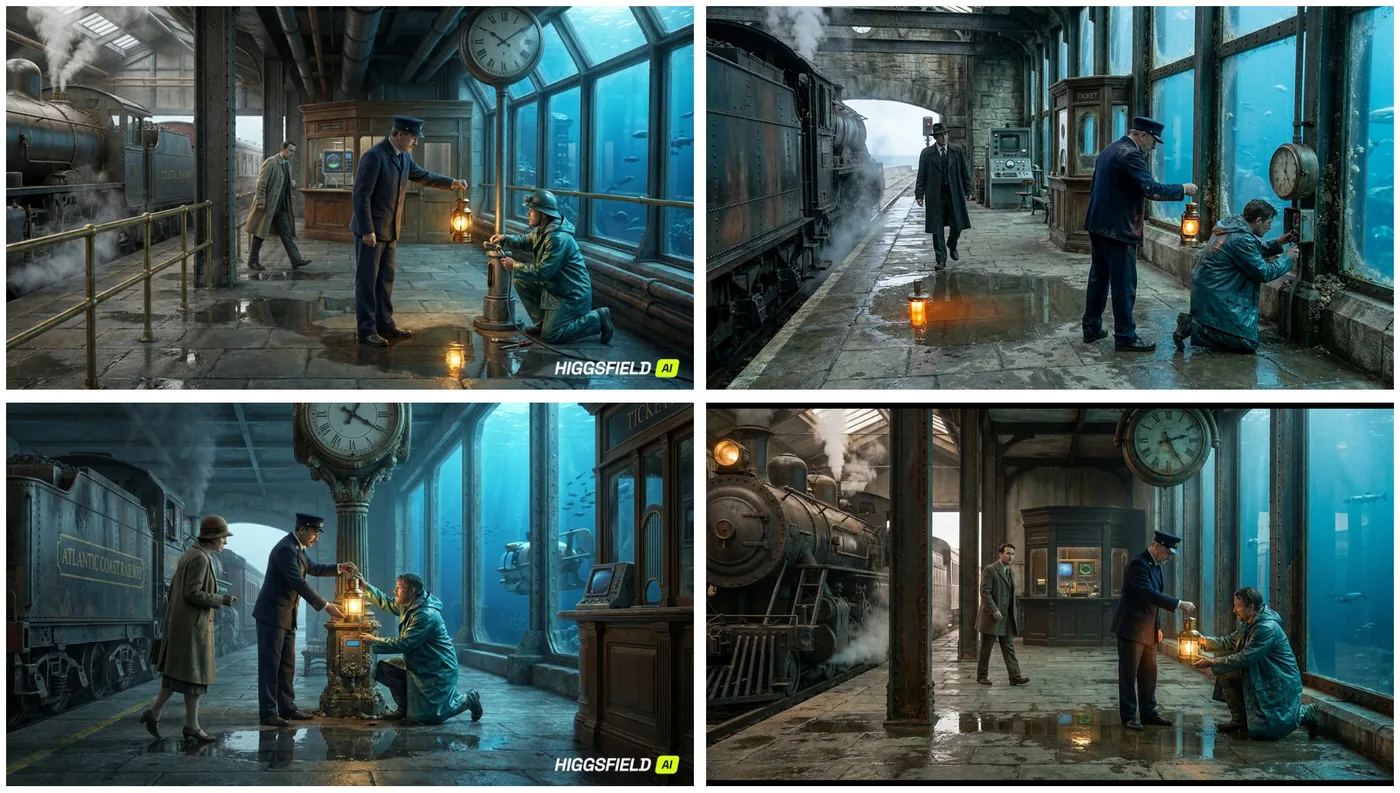 Contact sheet of the four downloaded originals: two Higgsfield Free PNGs and two AI Video Pro JPEGs, arranged together for inspection; it is not a fifth generated image.
What I actually matched in the two editors
The shared 1123-character prompt described one fictional 1920s railway and near-future undersea transit hall: a kneeling marine engineer, a porter handing over a brass lantern, a commuter stepping back from a puddle, locomotive left and blue-water seawall right. I entered it twice per product with 16:9 selected and no reference image. Both Higgsfield and AI Video Pro publicly labeled the option Nano Banana Pro. Matching labels do not prove identical processing, seeds or picture quality.
This was Higgsfield Free against AI Video Pro, not equivalent tiers. I did not use AI Video Pro Free or buy a Higgsfield plan. The Higgsfield setup shots and AI Video Pro opening editor document the requests; original downloads, not interface previews, establish the file-level findings.
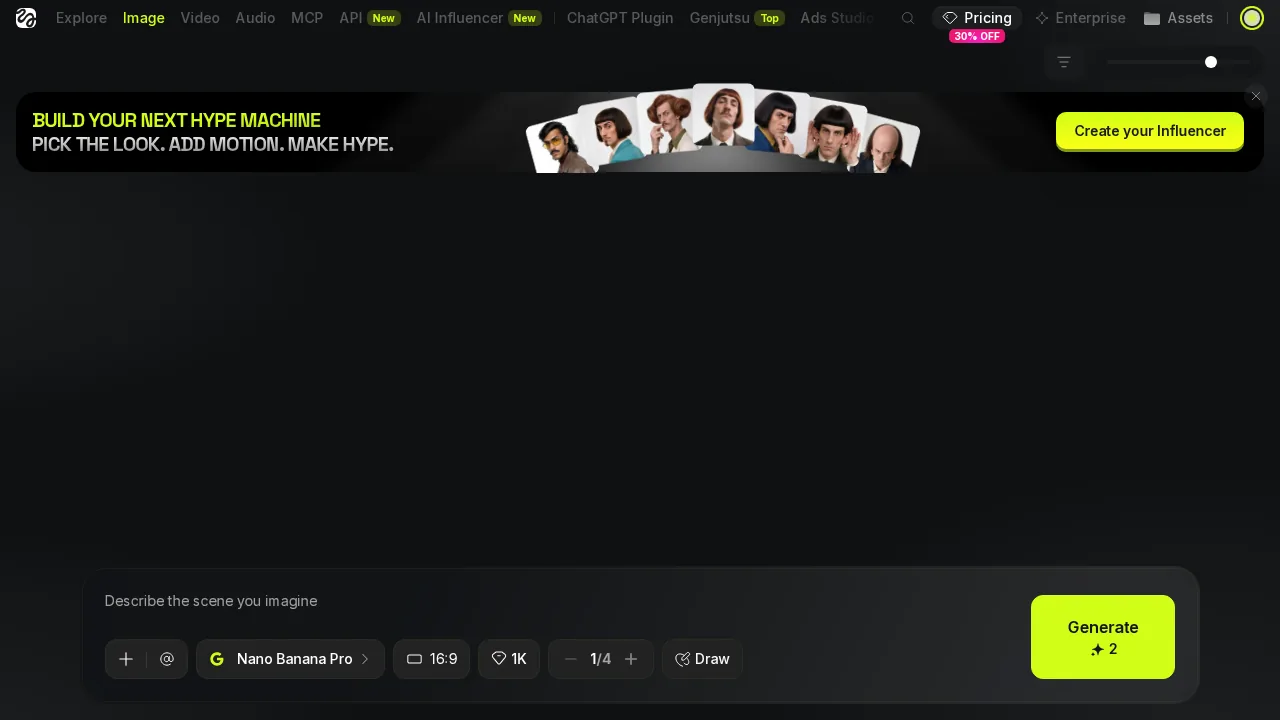 Higgsfield Free still-image editor at opening, before the first matched submission; an interface screenshot, not a downloaded original.
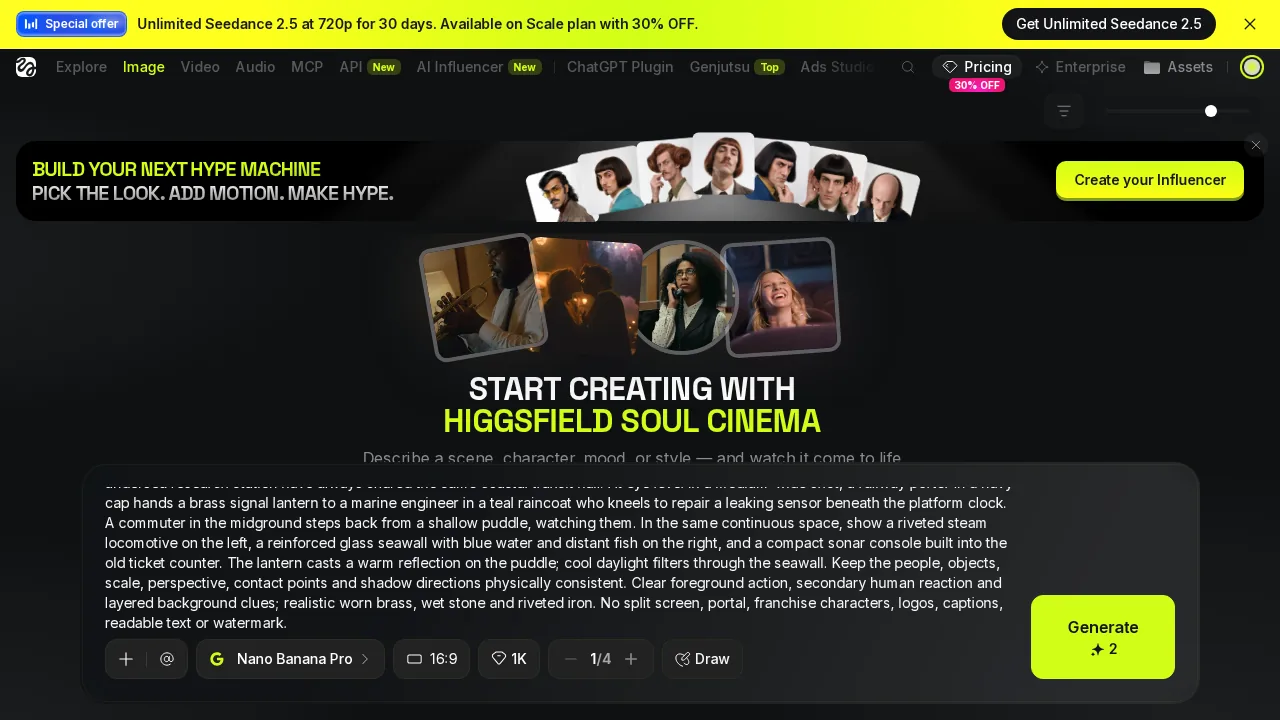 First Higgsfield image request in the editor, showing the prompt, public Nano Banana Pro label and selected 16:9 setting; no final image is established by this screen.
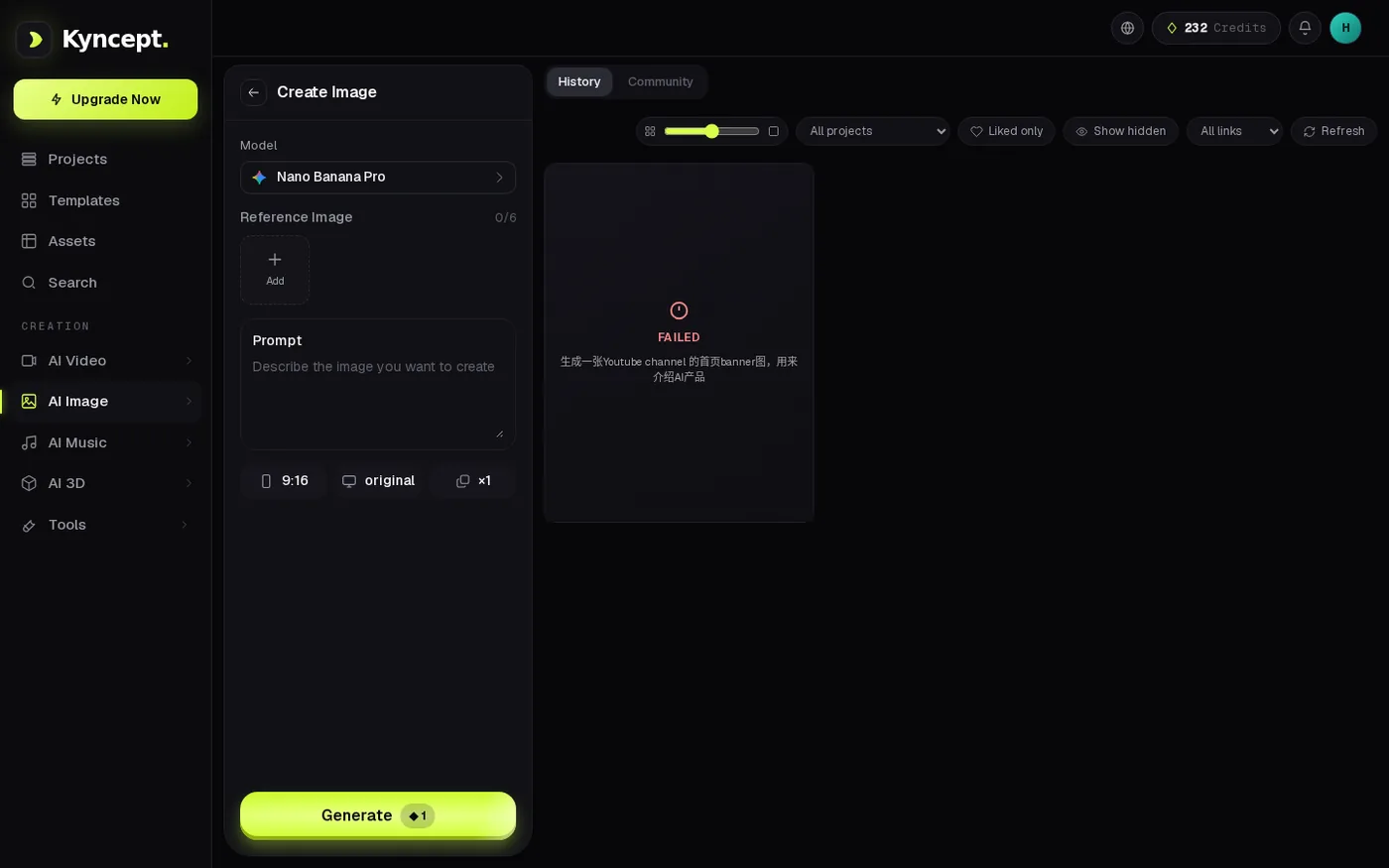 AI Video Pro image editor before its first matched still submission; this is the starting UI, not one of the exported JPEGs.
Four original downloads before any quality judgment
The four exported files below matter more than small result-page previews. Each measured 1376 × 768 pixels despite the selected 16:9 framing control; those dimensions are not mathematically exact 16:9. Compare the composition and watermark on the originals, not thumbnails. Higgsfield #1 has a hanging lantern near the kneeling engineer and a baked-in lower-right mark.
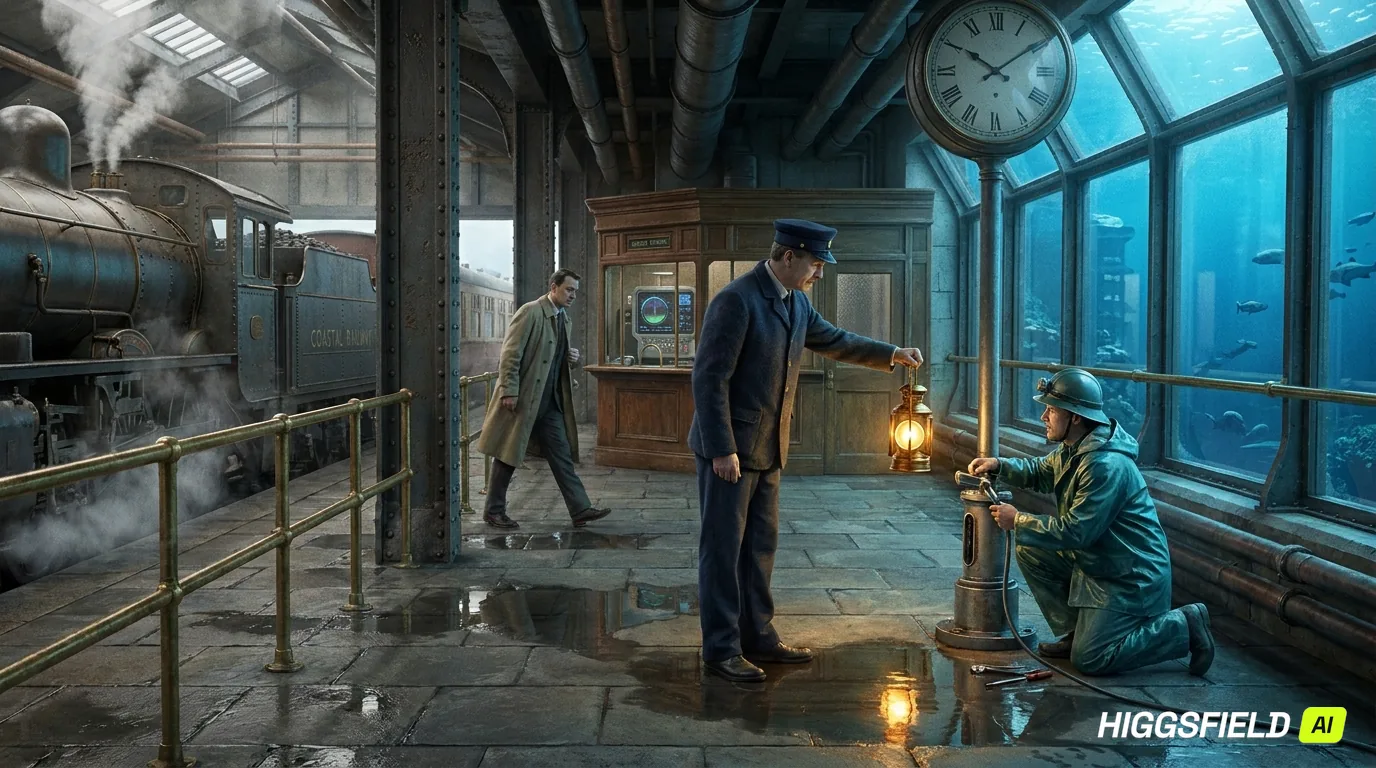 Downloaded Higgsfield Free original PNG #1, 1376 × 768 pixels, with the baked-in lower-right HIGGSFIELD AI mark; not an editor thumbnail.
Higgsfield #2 moves the lantern and hands nearer the engineer beneath the clock, again with the mark baked into the original.
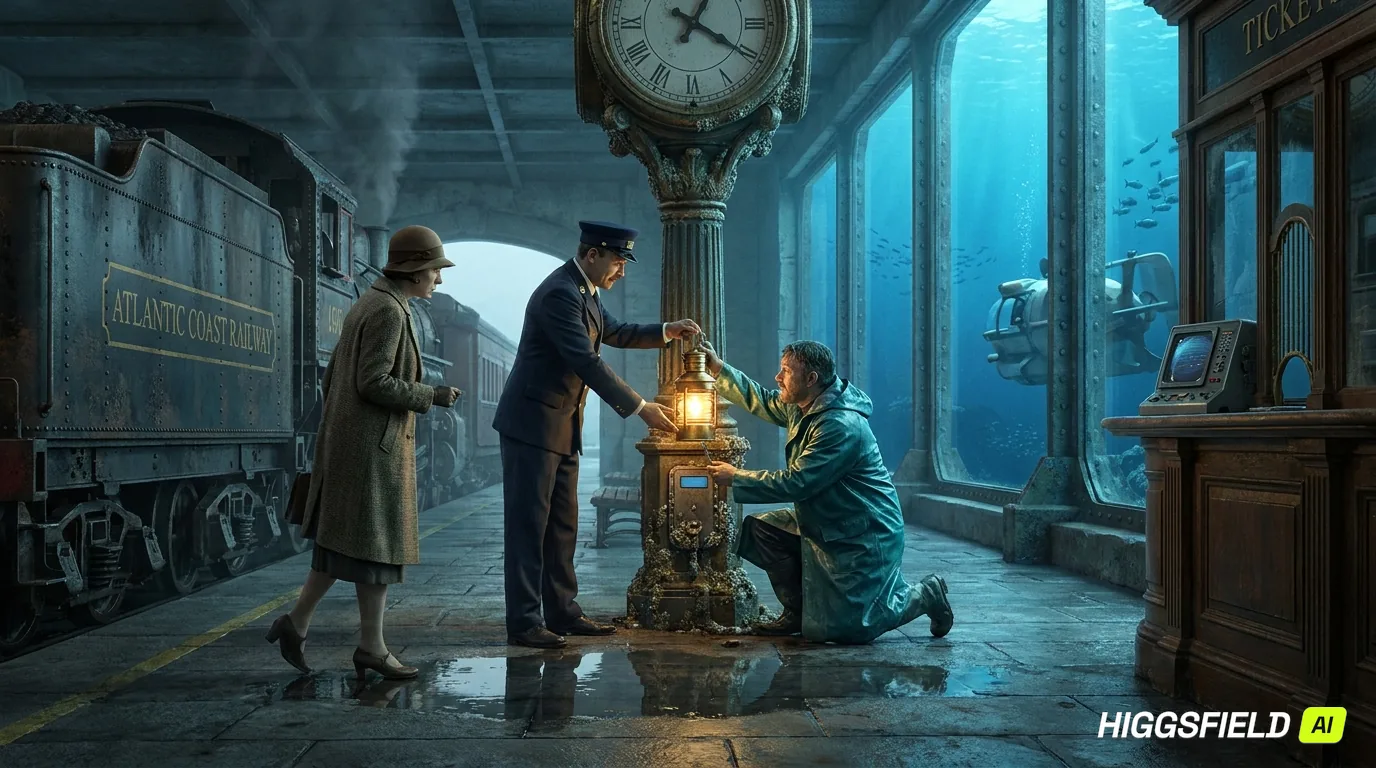 Downloaded Higgsfield Free original PNG #2, 1376 × 768 pixels, with the visible baked-in HIGGSFIELD AI mark; not an editor thumbnail.
AI Video Pro #1 places the lantern nearer the glass, apart from the engineer's work. I see no watermark in the downloaded JPEG.
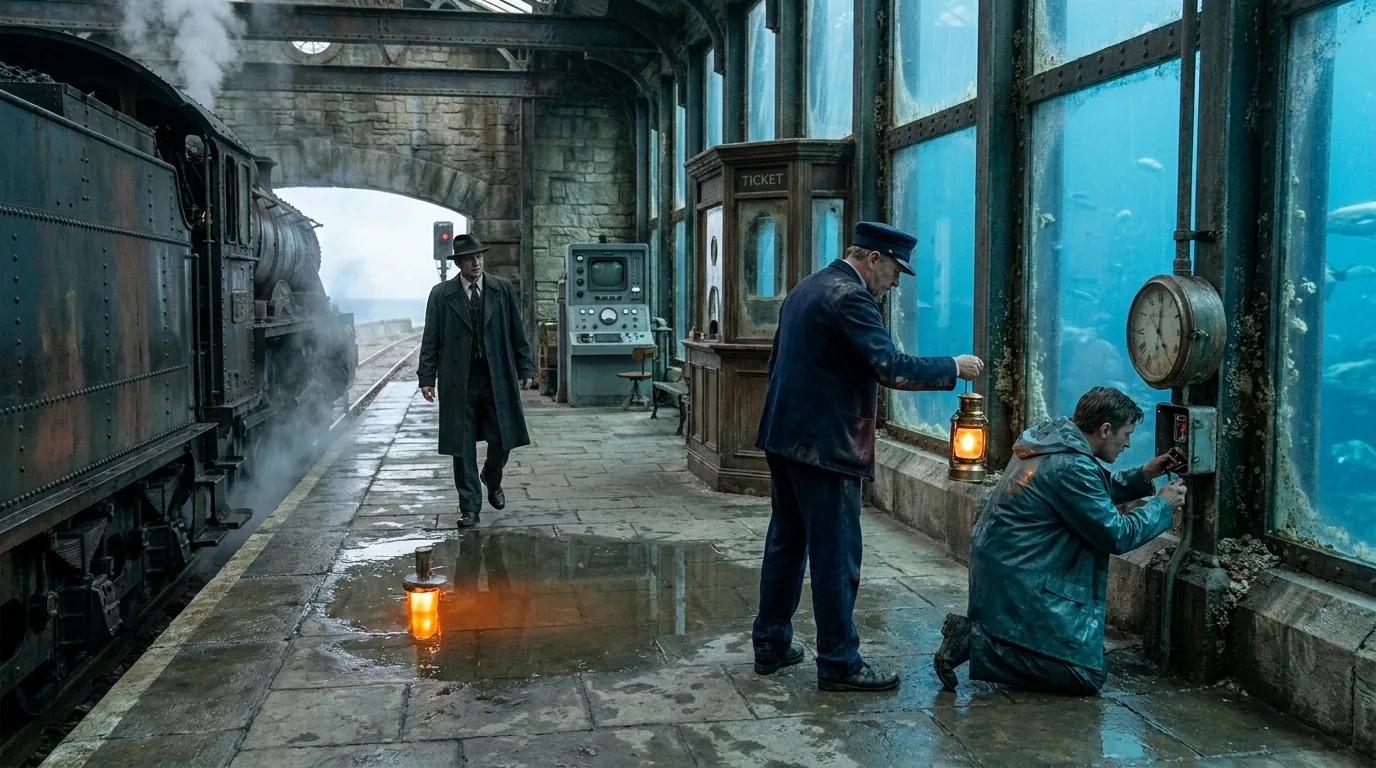 Downloaded AI Video Pro original JPEG #1, 1376 × 768 pixels; porter and lantern are near the glass, and no watermark is visible in this file.
AI Video Pro #2 brings the lantern closer to the engineer. Its centrally placed commuter does not clearly step backward.
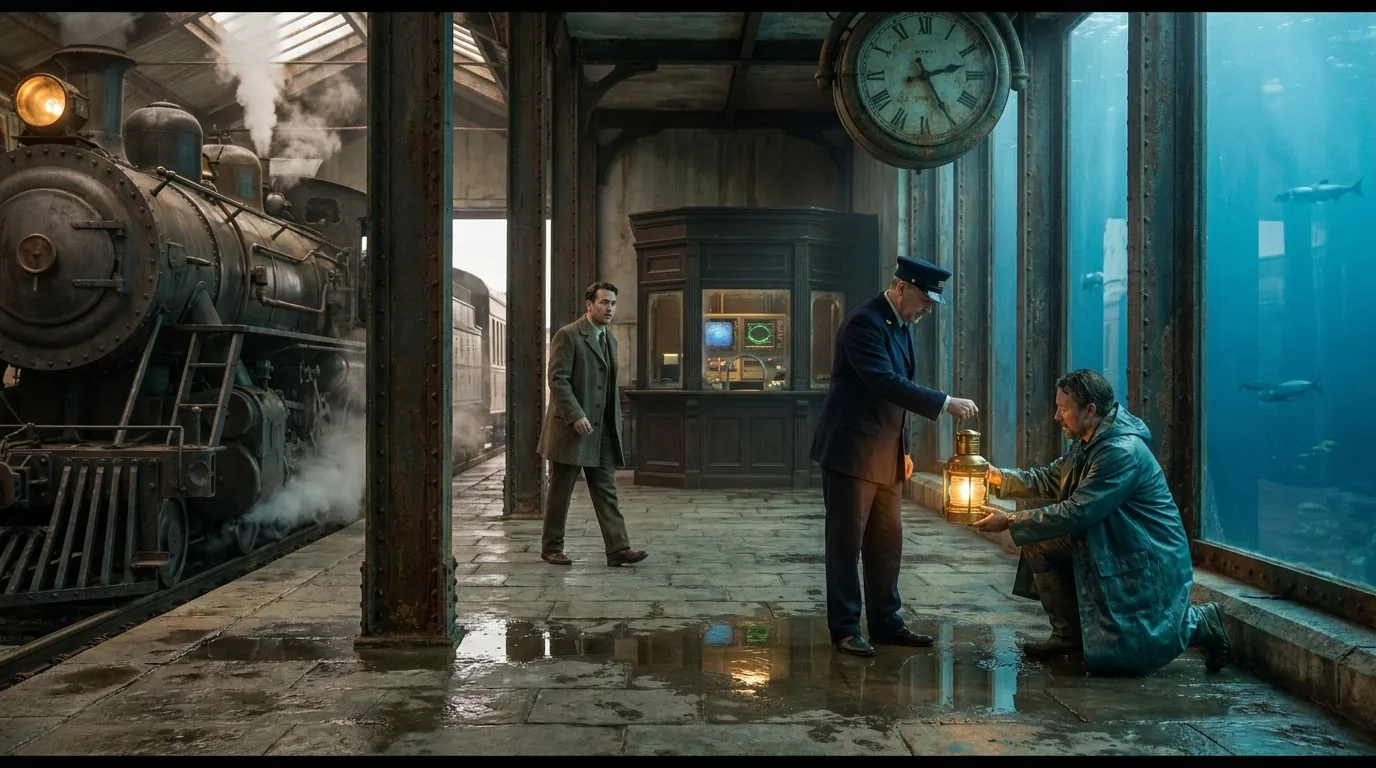 Downloaded AI Video Pro original JPEG #2, 1376 × 768 pixels; lantern is closer to the kneeling engineer, with no visible watermark in this file.
The locomotive and seawall are shared, not a win for either side
All four originals place the locomotive left and the blue-water seawall right in a continuous scene, not a split screen. Both Higgsfield stills and both AI Video Pro stills make the railway-undersea premise legible. Those shared landmarks do not certify the exact handoff, commuter reaction or physical consistency of every contact point.
Higgsfield's first result appears in its editor below. That UI thumbnail is evidence of completion, while the downloaded Higgsfield PNG above is evidence of its baked-in mark. I use the same distinction for AI Video Pro: inspect the original for detail, the editor for workflow.
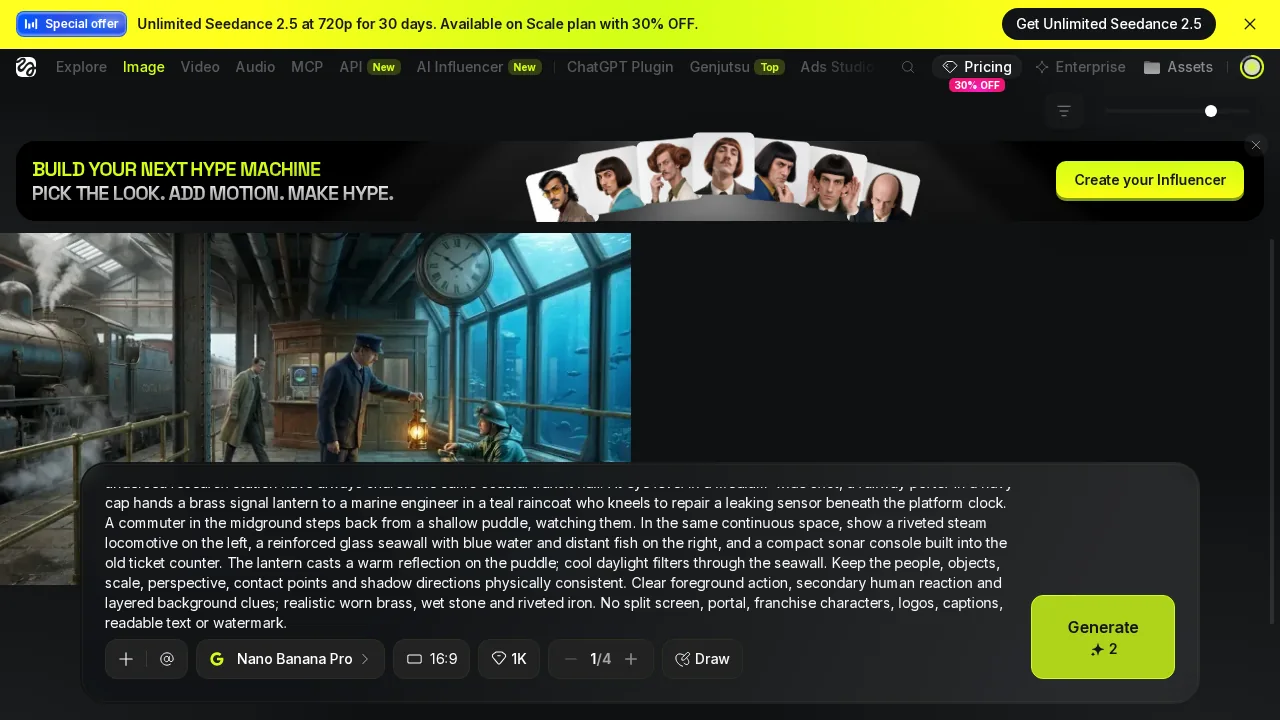 First Higgsfield result displayed in the editor; this UI view confirms a result appeared but is not the downloaded PNG used for file-level inspection.
A lantern handoff is not the same in every frame
The foreground action was a handoff to a kneeling engineer repairing a sensor. Higgsfield #1 instead emphasizes a hanging lantern; Higgsfield #2 brings hands and lantern near the engineer. AI Video Pro #1 separates the porter's lantern from the work; AI Video Pro #2 brings it closer. Within each product the staging changes, so one pleasing frame cannot prove a repeatable advantage. The AI Video Pro first-result screen below records completion and a 231-credit balance. It is a receipt and UI preview, not a substitute for examining the original JPEG above.
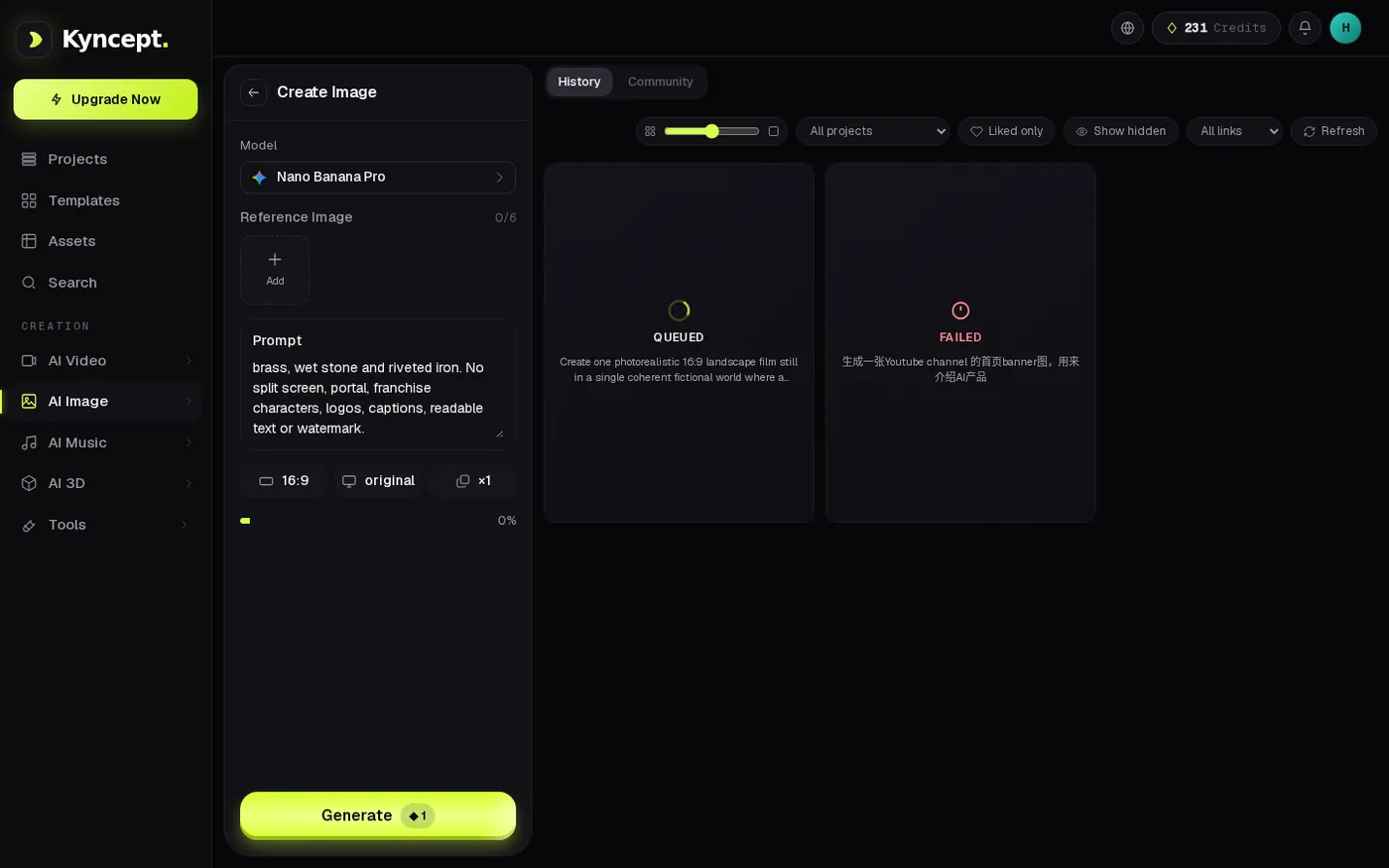 First AI Video Pro image displayed in its editor with 231 credits remaining after that run; the downloaded JPEG above is the original used for composition assessment.
The commuter is an ambiguous instruction, not a scored tally
The third person was meant to step back from a shallow puddle. In none of the four originals is that reaction unambiguous to me. The centrally positioned commuter in AI Video Pro #2 is not necessarily retreating; the Higgsfield figures likewise do not clearly establish the step. An apparent bystander is not proof that a motion instruction was delivered.
That is not a comparative failure rate: two Higgsfield and two AI Video Pro submissions cannot establish one. The second AI Video Pro result screen shows completion and 230 credits remaining, but I inspect the original to judge the person. If that action is essential, I would check every candidate full size.
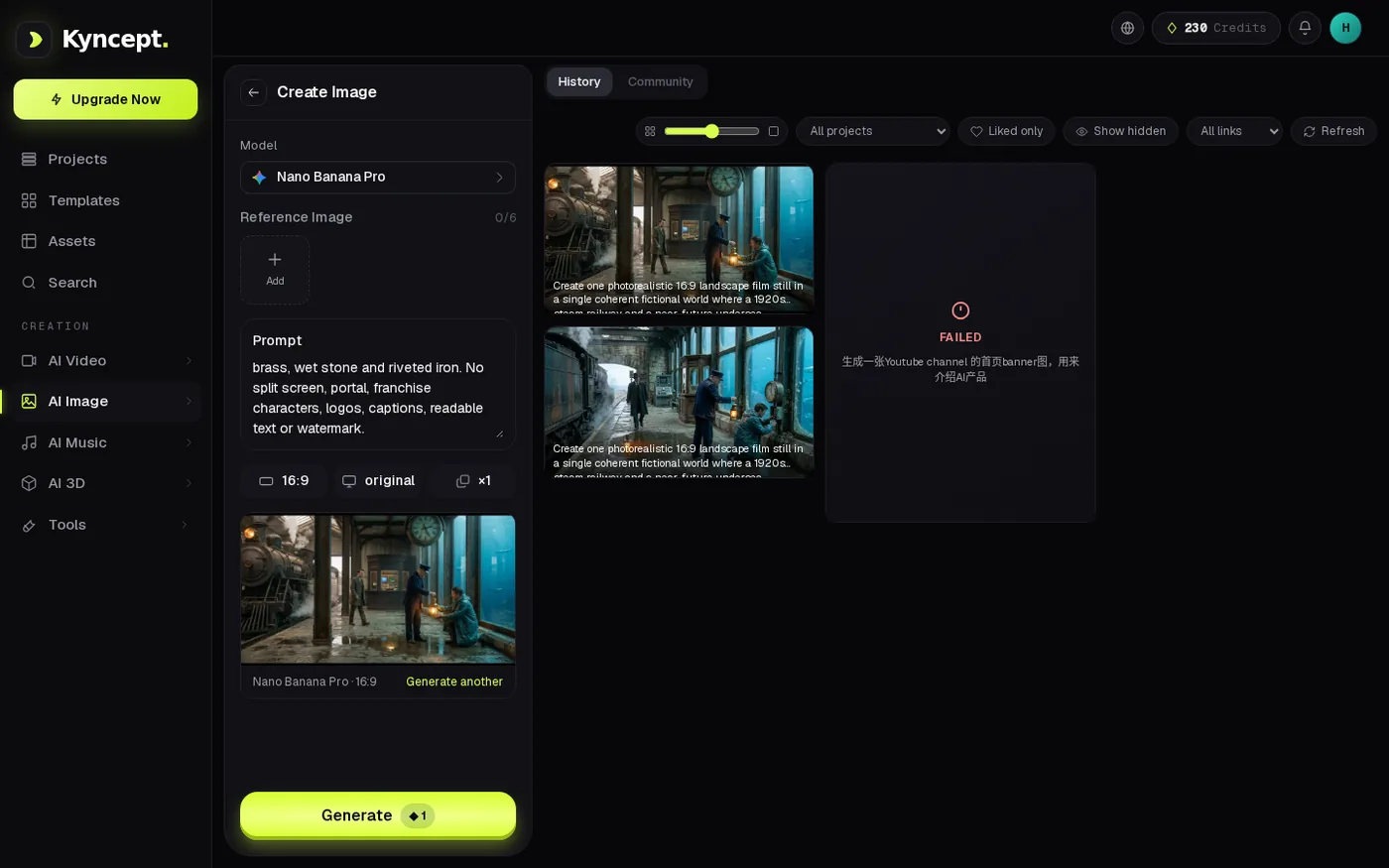 Second AI Video Pro result shown in the editor with 230 credits after completion; this UI preview does not independently prove the commuter stepped back.
No overall image-quality winner from these four files
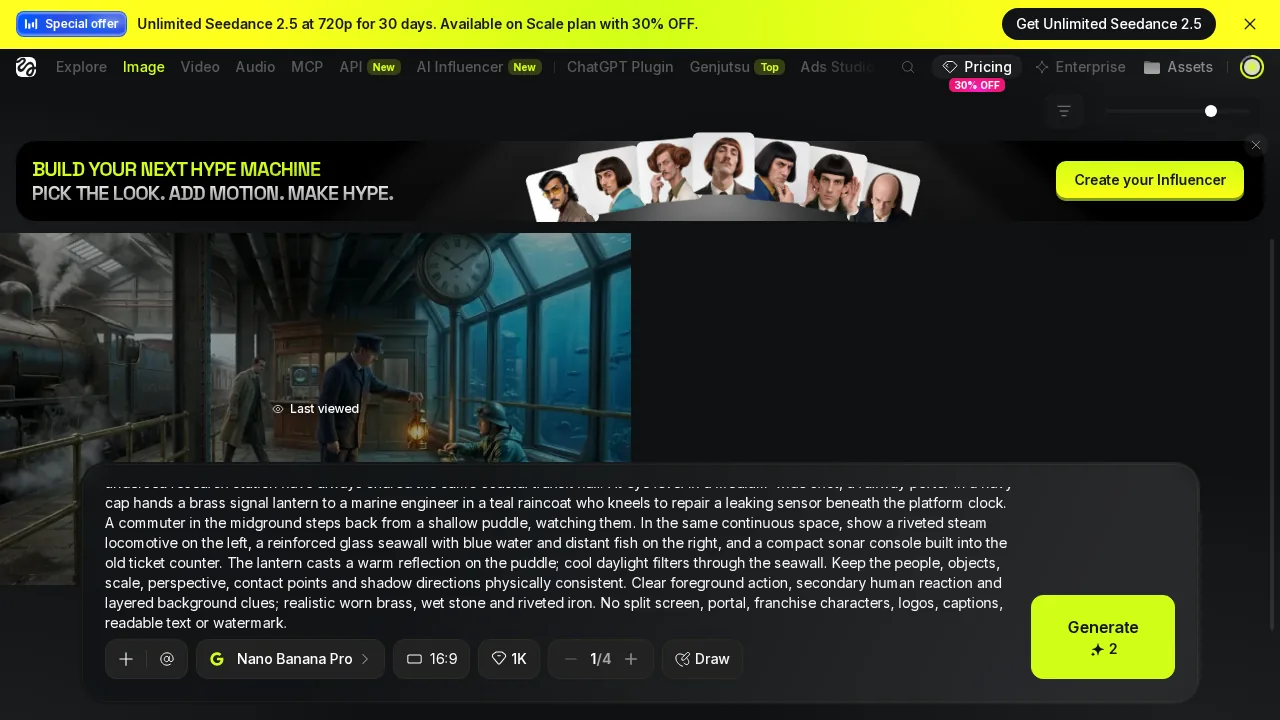
Higgsfield #1 emphasizes the lantern; AI Video Pro #1 places it apart from the engineer. Higgsfield #2 and AI Video Pro #2 bring the exchange closer. All four show locomotive and water; none clearly stages the retreating commuter. That supports no overall visual-quality winner from this test. I did not score aesthetic preferences, audit every shadow or prove identical processing from matching public labels. The second Higgsfield editor screenshot below confirms another result appeared, but quality judgments belong to the four original files, not their thumbnails.
The request also mentioned worn brass, wet stone, fish, a clock and a compact sonar console. Those details make the prompt demanding, but a list in the input is not a list of verified successes. I would show a prospective editor all four Higgsfield and AI Video Pro originals and let the intended composition determine which single frame to develop. On this evidence, I cannot convert a detail I happen to like in one Higgsfield still—or one AI Video Pro still—into a defensible general ranking of the products.
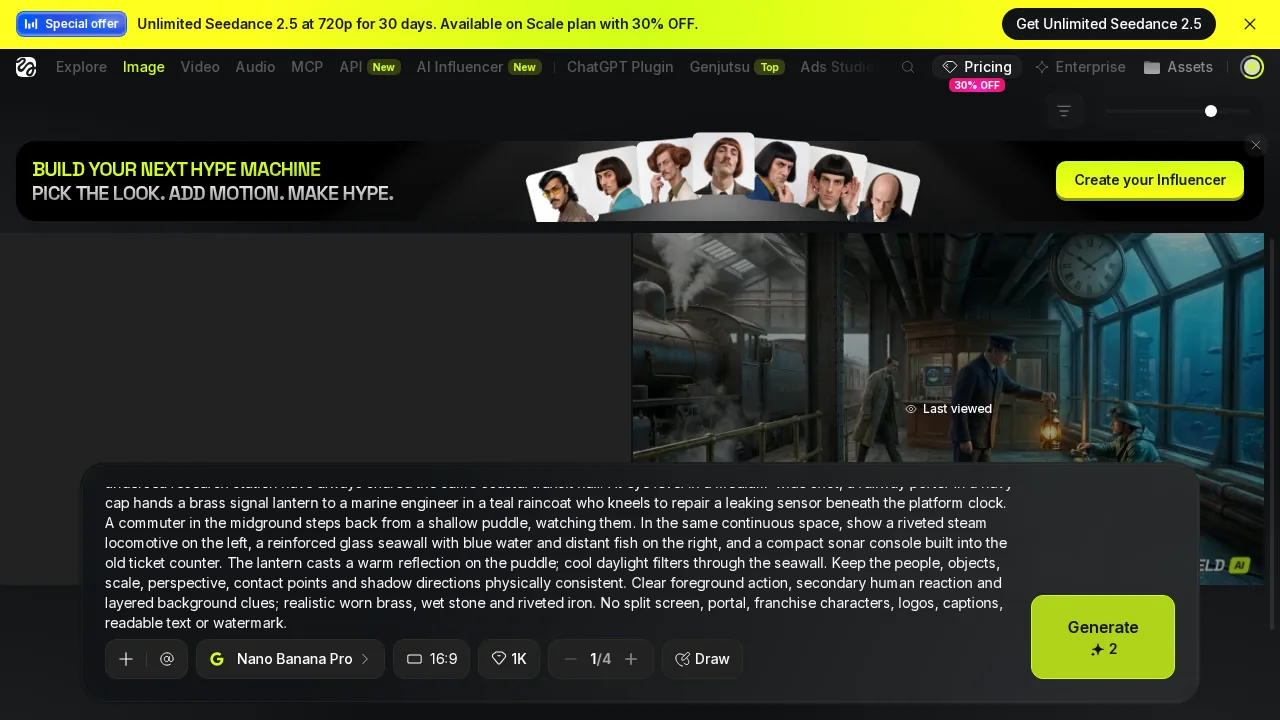 Second Higgsfield image displayed in its editor, a UI result thumbnail rather than the downloaded PNG #2 used in the four-file comparison.
The credit receipts: Higgsfield 2, AI Video Pro 1
Higgsfield Free's balance went 10 → 8 → 6: two credits per completed still, four total. AI Video Pro went 232 → 231 → 230: one each, two total. Higgsfield thus consumed 2× the credits per still on these unlike tiers. Credits are product-specific units, not interchangeable currency or a direct comparison of paid plan prices.
AI Video Pro's second editor prompt shows the one-credit Generate quote; its result screens show the subsequent balances. Higgsfield's debits came from observed before-and-after balances, although this article's Higgsfield UI thumbnails do not constitute the whole balance ledger. If these rates persisted for 100 submissions, that would mean 200 Higgsfield credits or 100 AI Video Pro credits—not 100 guaranteed usable pictures or monetary savings.
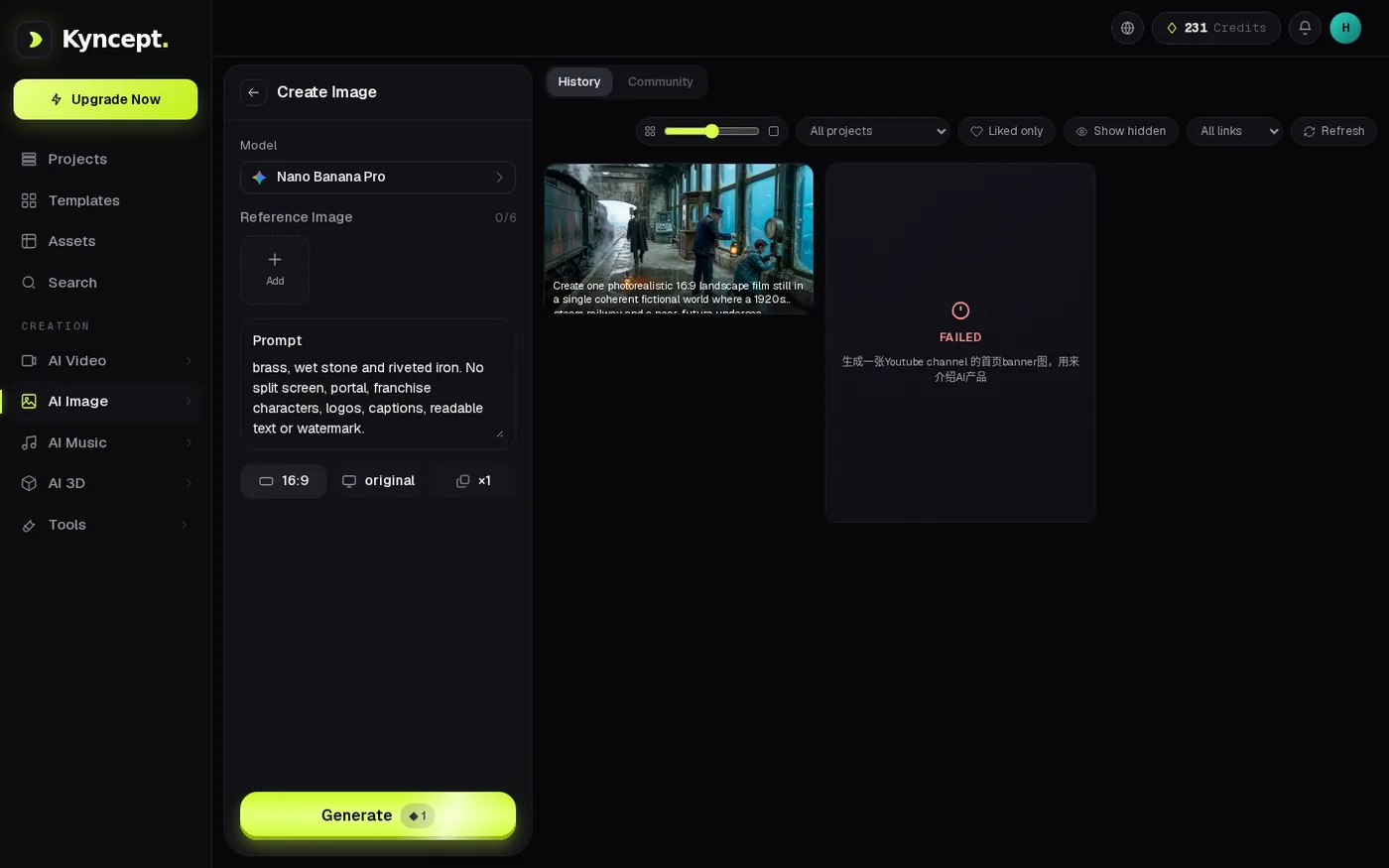 Second AI Video Pro image request in the editor before submission, showing the one-credit Generate quote; it is a prompt UI screen, not a generated original.
What the three reliable stopwatch numbers actually say
Higgsfield Free's two observed waits were 32.7 and 28.7 seconds. Only AI Video Pro image #2 has a reliable wait: 63.967 seconds. Its first completed without an established duration. These Higgsfield runs finished sooner than that one timed AI Video Pro run; I give Higgsfield credit for those observations, not a stable platform speed win.
There is no valid two-run AI Video Pro average here, and I will not project bulk hours saved from this tiny sample. The Higgsfield screenshot shows its first generation in progress; it is not an independent stopwatch record. The waits above came from observed timings, not the appearance of a progress indicator.
 First Higgsfield image in progress in the editor; this is a generation state, not the finished PNG or an independent timing record.
The Higgsfield Free watermark survived the download
Both Higgsfield Free original PNGs above contain a lower-right HIGGSFIELD AI mark. It survived downloading; this is not merely a Higgsfield UI overlay. Neither AI Video Pro original JPEG has a visible watermark. That is a practical distinction for a still I want to place in a finished layout.
I tested neither AI Video Pro Free nor a paid Higgsfield account. I cannot infer AI Video Pro Free's watermark policy or promise that a Higgsfield subscription would remove this mark. The tier mismatch belongs in every recommendation based on these files. The originals, not the Higgsfield result-page thumbnails, prove what was exported.
There is an especially clear request-versus-result distinction here: the image prompt explicitly said no watermark, yet the two Higgsfield Free downloads visibly include one. That statement is about the Higgsfield originals in this account, not about whether the visual model obeyed every other request or whether another Higgsfield tier would behave differently. AI Video Pro's unmarked originals answer the practical export question for the tier I actually used; they say nothing about an untested AI Video Pro Free account.
PNG, JPEG and what the byte counts do not prove
Higgsfield Free's PNG originals were 2,006,432 and 1,934,626 bytes; AI Video Pro's JPEGs were 937,800 and 850,528 bytes. All measured 1376 × 768 pixels. Their respective means were 1,970,529 and 894,164 bytes: roughly 2.20× as many bytes in these Higgsfield PNGs. That is not an image-quality score.
PNG and JPEG are different formats, so those bytes do not establish intrinsically better AI Video Pro compression, faster downloads, cheaper bandwidth or a picture-quality advantage. I would compare the four originals visually for the intended use, while treating their sizes as properties of these files alone.
The editor path, rather than just the final picture
In Higgsfield I saw the editor, entered the prompt, watched the first image generate and received the result; I repeated the same prompt for a second completed still. AI Video Pro likewise displayed its first generating and result states, then a second prompt and completed result. Both produced two downloadable originals. These screens establish a workflow, not a test of every model or export setting.
Higgsfield's second prompt screenshot below is a request, not an output. The AI Video Pro generation screenshot is an in-progress UI, not a clock for AI Video Pro run #1. Video is a separate, brief caveat: one Higgsfield Free Fast click led to an upgrade overlay, no debit and no clip; two AI Video Pro video charges yielded near-duplicate audiovisual files. Neither video observation changes the still-image quality judgment.
 Second Higgsfield still-image prompt and selected aspect before generation, showing the repeated request rather than a completed output.
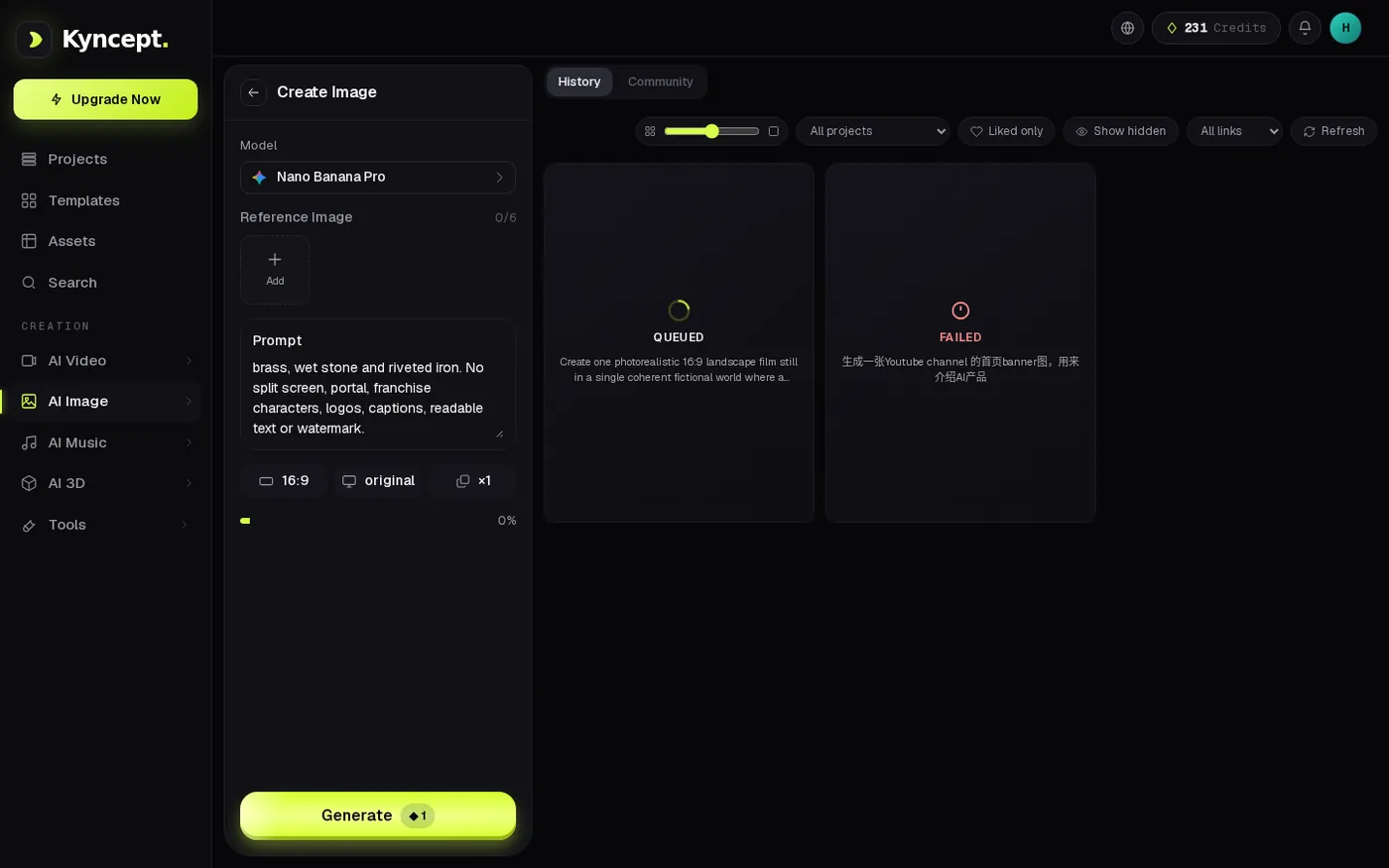 First AI Video Pro still in a generating state; this UI frame does not establish a reliable duration for that first run.
Final verdict: a four-still comparison with a measurable tariff, not a quality crown
Higgsfield Free completed two images in 32.7 and 28.7 seconds; AI Video Pro delivered two at one measured credit each, with only its second wait reliably timed at 63.967 seconds. Higgsfield's original PNGs were marked; AI Video Pro's Pro JPEGs visibly were not. Yet both captured locomotive and seawall, varied the lantern gesture and left the commuter's reaction unclear. I see no overall quality winner.
For a quick Higgsfield Free preview, its observed turnaround is real. For this publication-bound still, I prefer the unmarked AI Video Pro originals and smaller observed debit. This judgment stops at this prompt, these four files and these unequal account tiers.
Which one I would use for this job
For another still in this fictional railway-and-seawall setting, I would try AI Video Pro first at https://tr.ee/VLR5k6: it cost one credit per completed image in my two submissions, and its two downloaded JPEGs had no visible mark. I would still inspect the full-size result for the lantern handoff and the uncertain bystander before using it. Higgsfield has a defensible place if its observed Free-account turnaround matters more to a particular preview workflow, but Higgsfield charged two credits per image here and baked a mark into both Free PNG originals. That preference is about the measured trade-off, not a claim that one interface always draws better pictures.
Originally published on Medium: Higgsfield AI Image Generator Review 2026: Same Model, 2× Credits.